About this UML Class diagram for E-Voting System template
This template provides a clear visual blueprint for building a secure digital voting platform. It maps out the essential classes and methods required to handle registrations, cast ballots, and manage election results efficiently for developers.
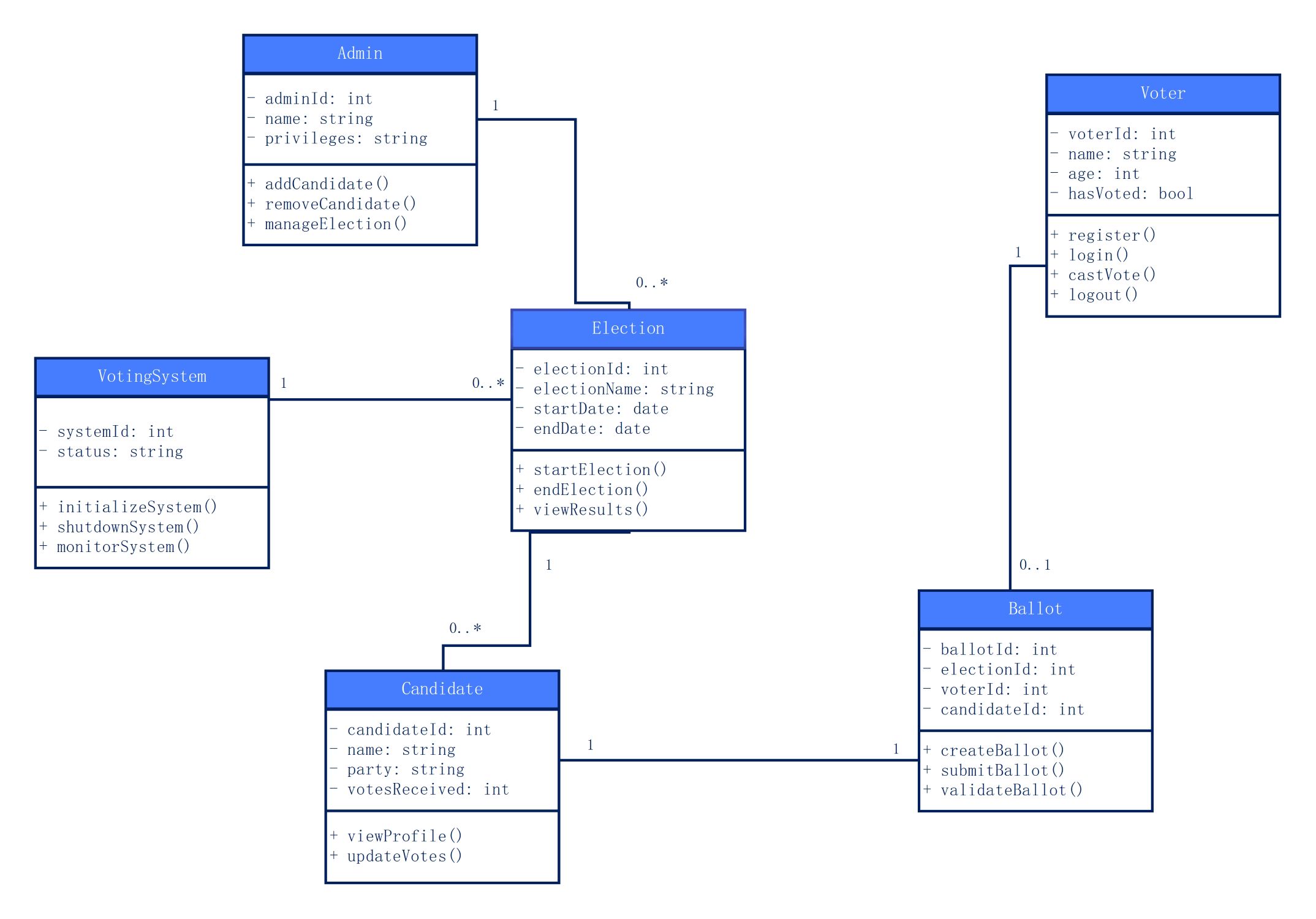
Admin Class
The Admin class represents the system administrator responsible for setting up and overseeing the election. This role ensures the integrity of the process by managing the candidate list and controlling the election lifecycle and schedules.
- adminId (int)
- name (string)
- privileges (string)
- addCandidate()
- removeCandidate()
- manageElection()
Voter Class
The Voter class tracks individual users participating in the election process. It manages authentication and prevents double-voting by tracking status. This class handles the core interaction between the user and the digital ballot box securely.
- voterId (int)
- name (string)
- age (int)
- hasVoted (bool)
- register()
- login()
- castVote()
- logout()
Election Class
The Election class serves as the central hub for specific voting events. It stores timing details and unique identifiers to organize different contests. It is responsible for starting events, ending them, and displaying the final results.
- electionId (int)
- electionName (string)
- startDate (date)
- endDate (date)
- startElection()
- endElection()
- viewResults()
Candidate Class
The Candidate class holds information about participants running for office. It tracks their names, political parties, and the total number of votes they receive. This data is updated in real-time as ballots are cast and validated.
- candidateId (int)
- name (string)
- party (string)
- votesReceived (int)
- viewProfile()
- updateVotes()
Ballot Class
The Ballot class represents the digital record of a single vote. It links a specific voter to their chosen candidate within a specific election. This ensures that every vote is accounted for and can be validated.
- ballotId (int)
- electionId (int)
- voterId (int)
- candidateId (int)
- createBallot()
- submitBallot()
- validateBallot()
VotingSystem Class
The VotingSystem class acts as the main software infrastructure. It monitors the overall health of the platform and handles system-wide operations like initialization or shutdown. It acts as the backbone that keeps the entire voting application running.
- systemId (int)
- status (string)
- initializeSystem()
- shutdownSystem()
- monitorSystem()
FAQ concernant ce modèle
-
Pourquoi un diagramme de classes UML est-il important pour un système de vote électronique ?
Un diagramme de classes UML est essentiel car il définit la base structurelle du logiciel de vote. Il identifie chaque objet nécessaire, tel que les électeurs et les bulletins de vote, et explique comment ils interagissent. Cela évite les erreurs logiques et garantit que l'architecture du système est suffisamment robuste pour gérer un trafic élevé tout en maintenant l'intégrité des données lors d'élections critiques.
-
Comment le système empêche-t-il un électeur de voter plusieurs fois ?
Le système empêche le double vote grâce à l'attribut booléen "hasVoted" dans la classe Voter. Lorsqu'un électeur soumet un bulletin de vote, le système met à jour ce statut à true. Les méthodes login et castVote vérifient cet indicateur avant d'autoriser toute action supplémentaire. Cette contrainte logique garantit que chaque utilisateur enregistré ne contribue qu'un seul vote.
-
Quelle est la relation entre les classes Ballot et Candidate ?
La relation est une association directe où un bulletin de vote est lié à exactement un candidat. Cela permet au système d'incrémenter avec précision l'attribut "votesReceived" dans la classe Candidate chaque fois qu'un nouveau bulletin de vote est validé. Cela garantit que le processus de dépouillement est transparent et que chaque bulletin de vote est correctement attribué à la personne visée.




 (IA et Web)